Sony Brings Greater Sustainability to BRAVIATM TVs as Part of Its Road to Zero Environmental Plan
Advancing resource efficiency through “Material-to-Material recycling”
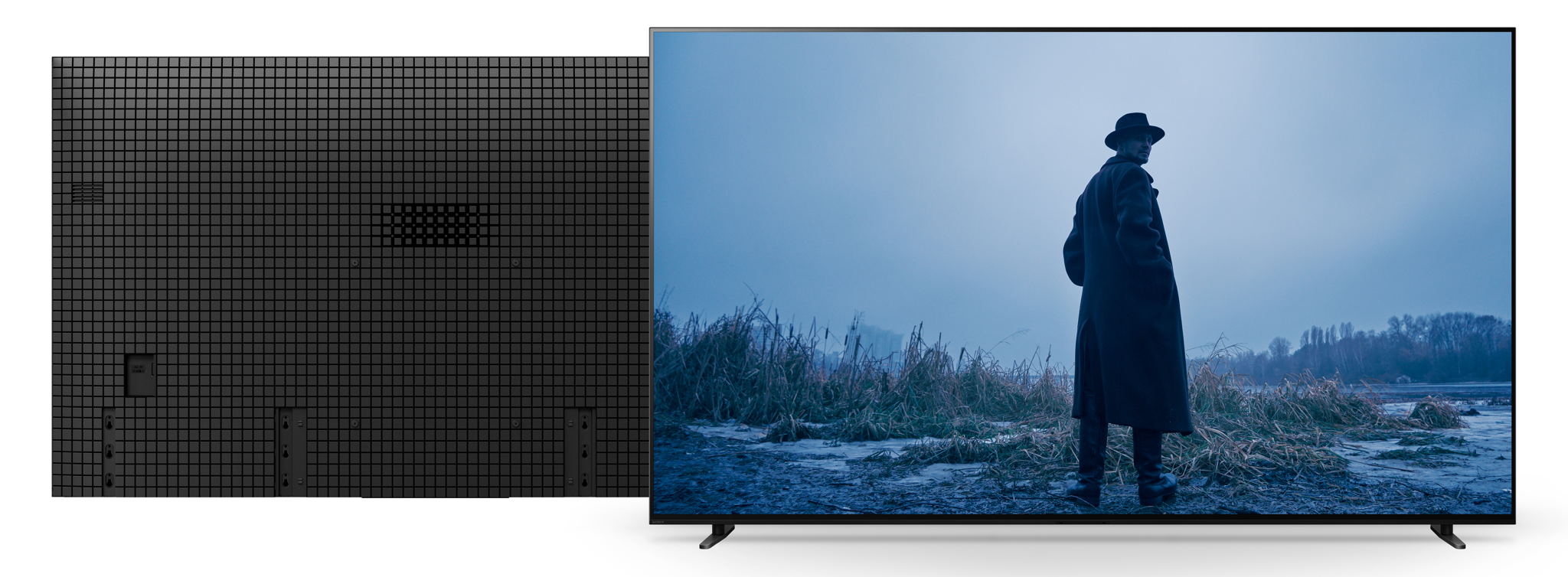
As part of Sony’s long-term commitment to sustainability, under its global Road to Zero environmental plan, recycled TV components are now utilised in SORPLASTM[i] for BRAVIA TV parts to help reduce environmental impact throughout their lifecycle.
Sony has pioneered and developed “Material-to-Material recycling”, utilised in SORPLAS™, Sony's flame-retardant recycled plastic material, that uses plastic recovered from the rear covers of end-of-life televisions in new BRAVIA TV products. By prioritising “Material-to-Material recycling”, Sony ensures that plastic waste is transformed into high-quality components by the designated collection facility[ii], helping to reduce environmental impact, without compromising design or durability. This innovative recycling method will be implemented for the first time in the 65-inch model of the 4K OLED BRAVIA 8 with global shipments scheduled to begin within 2025.
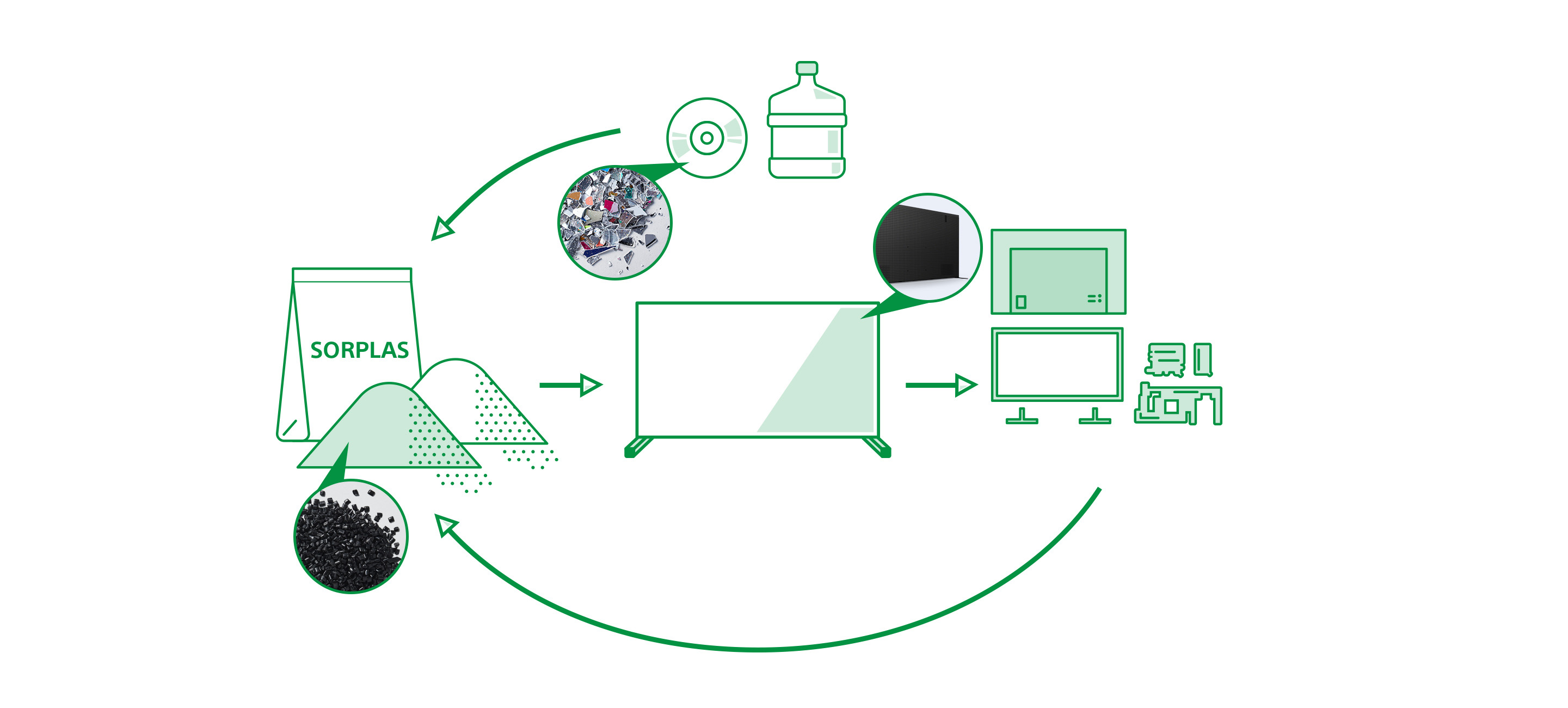
Rear covers collected from end-of-life TVs contain various types of plastic, which previously made direct reuse in new products difficult due to differences in strength and texture. To overcome this challenge, the BRAVIA design team collaborated with Sony Semiconductor Solutions Corporation, the developer of SORPLAS, to create advanced sorting technology and optimal material blending methods suitable for television reuse. This technology enables the collection and sorting of specific plastics from used TV rear covers from any manufacturer for partial reuse as raw materials whilst maintaining the same high quality as conventional SORPLAS.

In the future, Sony aims to achieve complete "closed-loop recycling" (fully circular recycling that reuses end-of-life products as raw materials for new products) by recovering and reusing rear covers made with SORPLAS.
Sony has also introduced more intelligent energy-saving features in the latest BRAVIA TVs. The Eco Dashboard[iii] allows users to intuitively monitor and manage their energy settings in one place. By activating the recommended energy-saving configurations, users can reduce power consumption by approximately 38%[iv] compared to the out-of-box settings.
In addition, with Ambient Light Sensing enabled via the Eco Dashboard, BRAVIA TVs automatically adjust screen brightness based on the lighting conditions in your room—ensuring optimal viewing comfort while minimising unnecessary energy use.
These enhancements reflect Sony’s broader efforts to advance sustainable innovation in its products, packaging, and operations. Beyond TVs, the company continues to work toward its Road to Zero target, which aims to achieve a zero environmental footprint across the entire value chain by 2050.
Sony is also taking steps to optimise product transport and logistics, reduce plastic packaging, and incorporate renewable energy in its manufacturing processes—all while delivering the high performance and picture quality that BRAVIA is known for.
On World Environment Day, Sony reaffirms its belief that entertainment and environmental responsibility can go hand-in-hand—empowering consumers to make choices that are better for the planet without sacrificing experience.
For more information you can visit:
About Sony Europe B.V.
Sony Europe B.V. is a sales and marketing company for Sony’s leading Entertainment, Technology & Services business aimed at consumer and professional markets, as well as the Imaging & Sensing Solutions business across Europe. The company is a subsidiary of Sony Europe Limited, which is a wholly owned subsidiary of Sony Group Corporation. We work to deliver Sony's purpose to fill the world with emotion through the power of creativity and technology.
For more information, visit: www.sony.eu/presscentre
Notes to Editors
[i] SORPLAS™ (Sustainable Oriented Recycled Plastic) is a flame-retardant recycled polycarbonate resin developed by Sony that achieves high quality with high recycled material content (up to 99%). It significantly reduces CO2 emissions during manufacturing compared to virgin materials.
[ii] Green Cycle Corporation
[iii] Default settings
[iv] Energy-saving settings on (Power Saving: High / Light sensor: Off)